I am a Postdoctoral Researcher in the Department of Civil and Environmental Engineering at the University of California, Berkeley, working with Prof. Kenichi Soga. My research develops high-fidelity computational methods for geomaterials in extreme environments, where coupled thermal, hydraulic, mechanical and chemical (THMC) processes drive large deformation and failure.
My work centers on the material point method (MPM) and its coupling with the discrete element method (DEM) and fluid solvers. I have developed fully coupled THM/THMC-MPM formulations and multiscale MPM-DEM frameworks to simulate freezing and thawing in permafrost, phase transition in methane hydrate-bearing sediments, and the geohazards they trigger, from thaw-induced landslides to submarine slope instability. This work has appeared in leading journals in computational and solid mechanics, including JMPS, CMAME, IJNME, IJNAMG and Computers and Geotechnics.
I received my Ph.D. in Civil Engineering from HKUST in 2025 under the supervision of Prof. Jidong Zhao, and my B.Eng. and M.Eng. in hydraulic engineering from Hohai University. Before joining Berkeley, I was a postdoctoral researcher at HKUST, and I have been a visiting researcher at UC Berkeley and University College London.
Research interests
- Particle and hybrid numerical methods: MPM, DEM, MPM-DEM, MPM-FVM
- Multiphysics (THM/C) modeling of multiphase granular media, e.g., frozen soils and hydrate-bearing sediments
- Climate-driven geohazards: permafrost thaw, rainfall-induced landslides, hydrate dissociation-induced instability
- Geomechanics in extreme environments: submarine, deep underground and extraterrestrial
- Machine learning-aided multiscale and multiphysics modeling
- 3D printing of extrusion-based materials: rheology and numerical modeling
I am open to collaborations and academic opportunities.
Oct 8, 2026
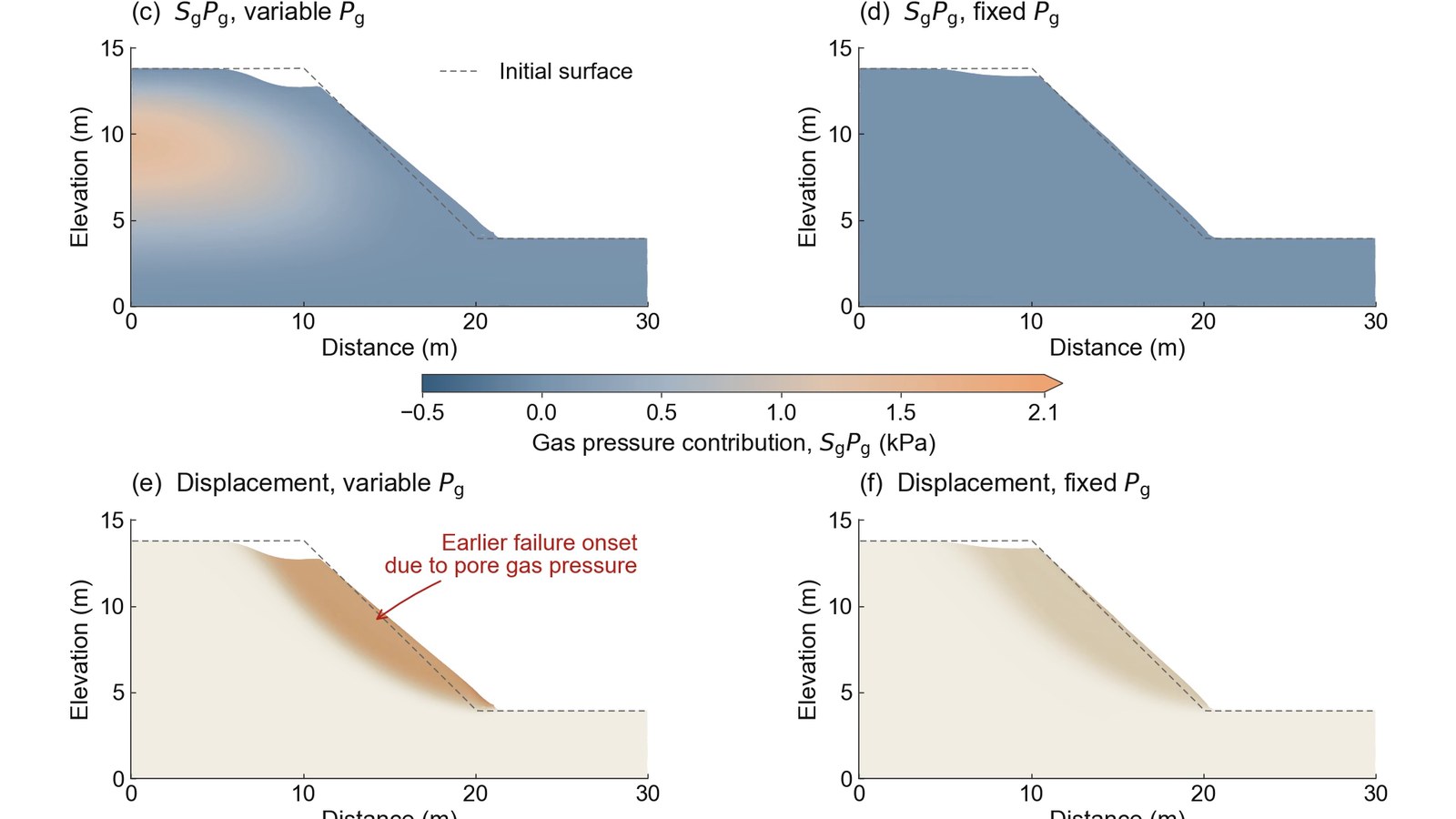
A collaboration with former HKUST colleagues shows that trapped, compressed pore-air can bring forward slope failure under rapid surface flooding, even though it slows the wetting front.
Read more →Oct 1, 2026
Jidu's abstract on shear-triggered hydrate dissociation and submarine slope failure has been accepted for an oral presentation at the AGU26 Annual Meeting in San Francisco.
Read more →Sep 27, 2026
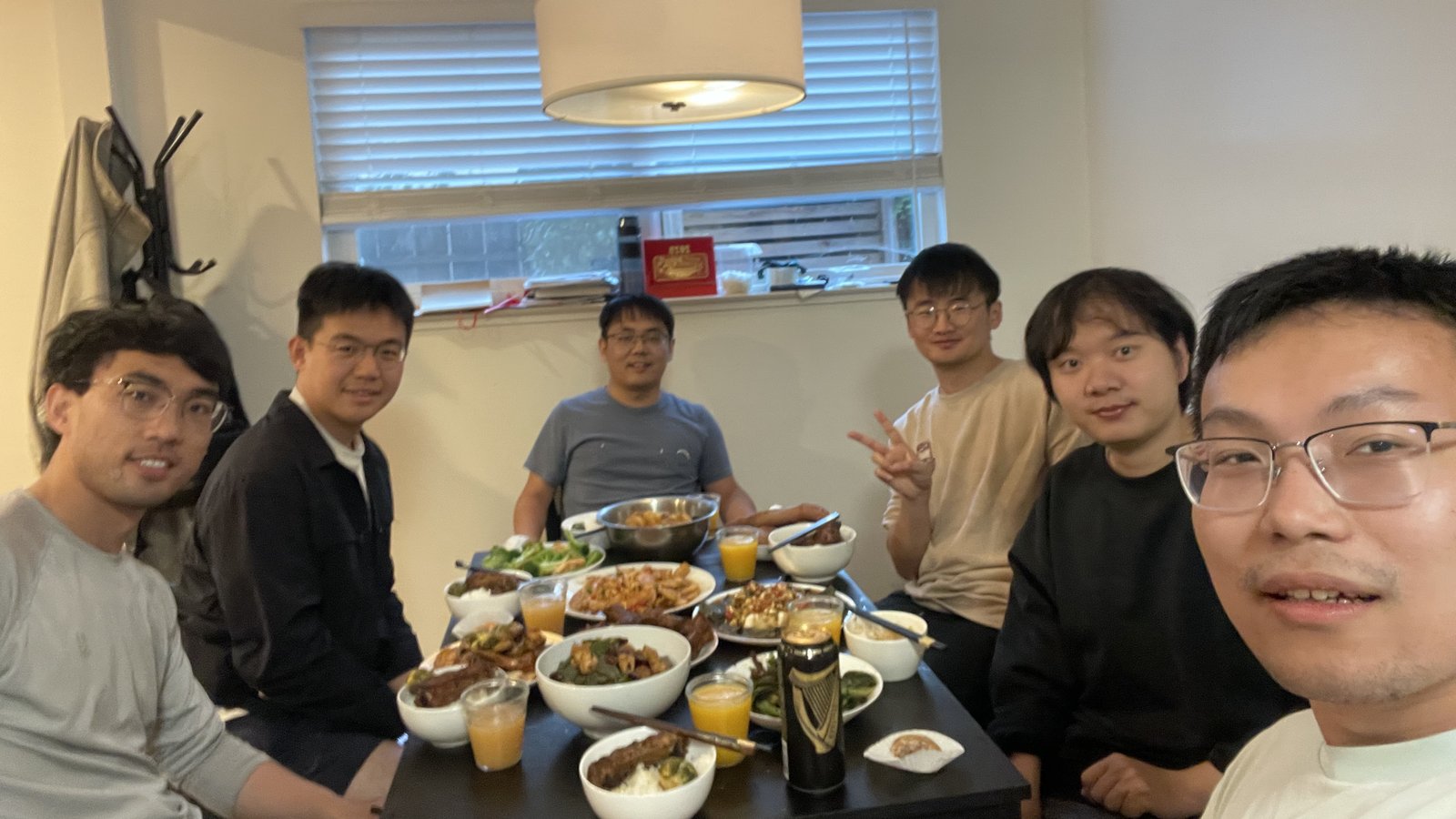
Jidu celebrated the Mid-Autumn Festival with colleagues and friends from UC Berkeley and Berkeley Lab, over a home-cooked dinner and a Hunan feast with Prof. Soga's group.
Read more →Sep 24, 2026
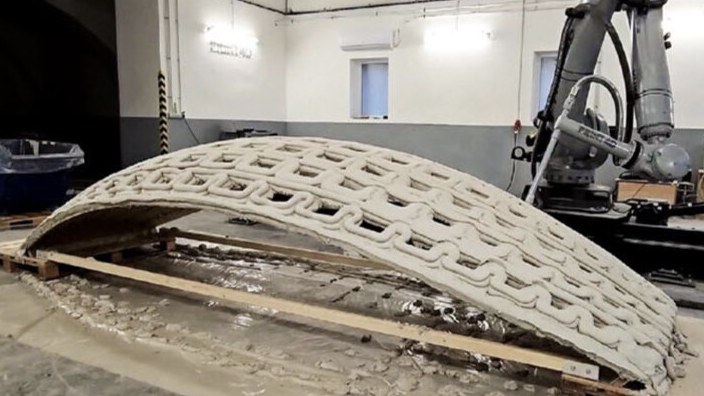
Prof. Kenichi Soga, Jidu and Yaobin visited Prof. Simon Schleicher's 3D printing lab at the Richmond Field Station to explore collaboration between computational modeling, fiber optic sensing and 3D printed architecture.
Read more →Sep 21, 2026
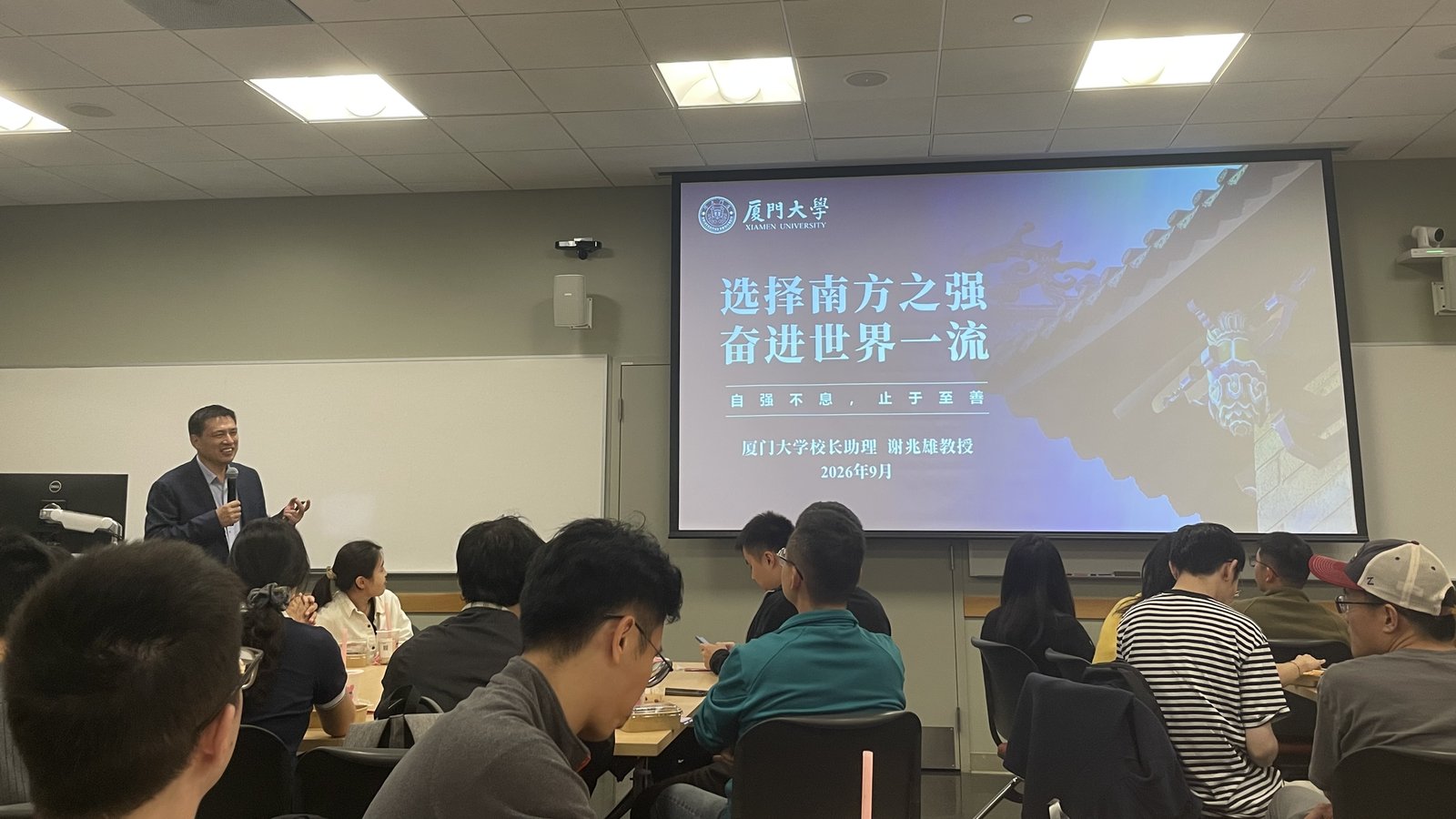
Jidu attended Xiamen University's Bay Area talent exchange event at Stanford University, where Prof. Zhaoxiong Xie, Assistant to the President, introduced the university's talent recruitment programs.
Read more →Sep 10, 2026
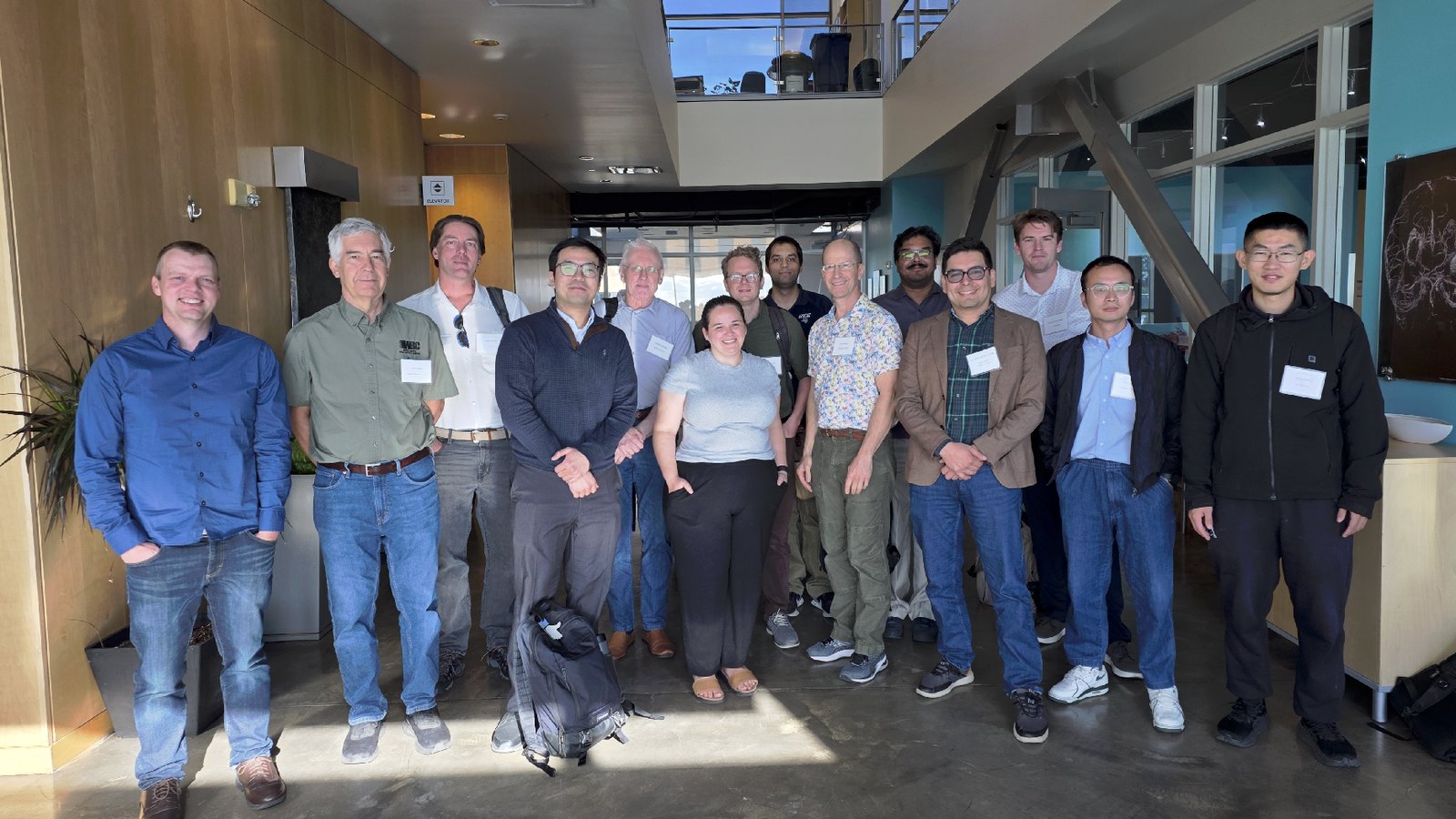
Our work on a solid-like rheological model for fresh concrete and its implementation in the material point method was presented at the 17th Annual MPM Workshop in Salt Lake City, Utah.
Read more →Jun 24, 2026
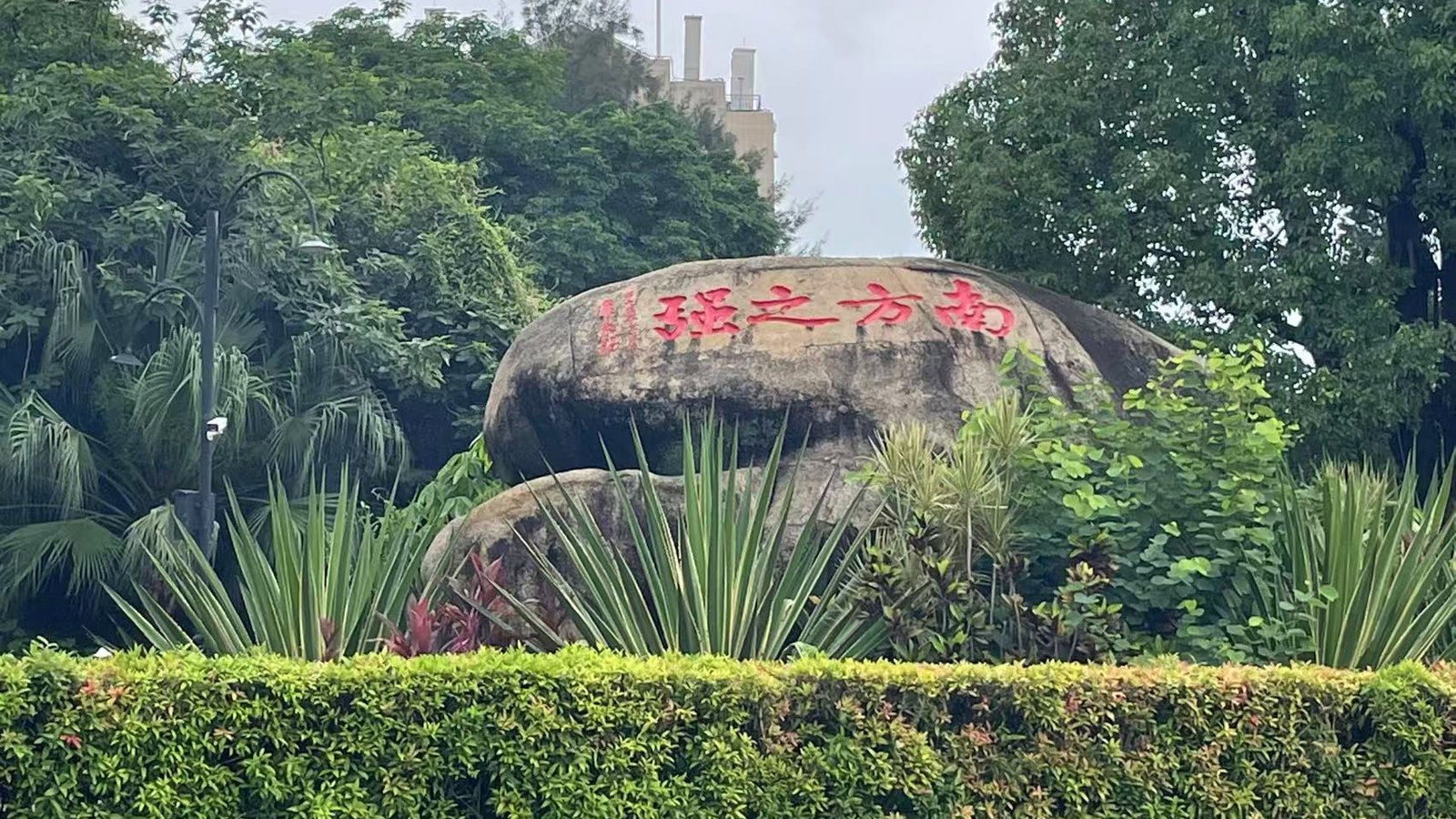
Jidu visited the College of Architecture and Civil Engineering at Xiamen University and met with Dean Prof. De-Chun Lu to discuss marine geotechnics and how multiphysics, multiscale modeling can serve ocean engineering.
Read more →Jun 21, 2026
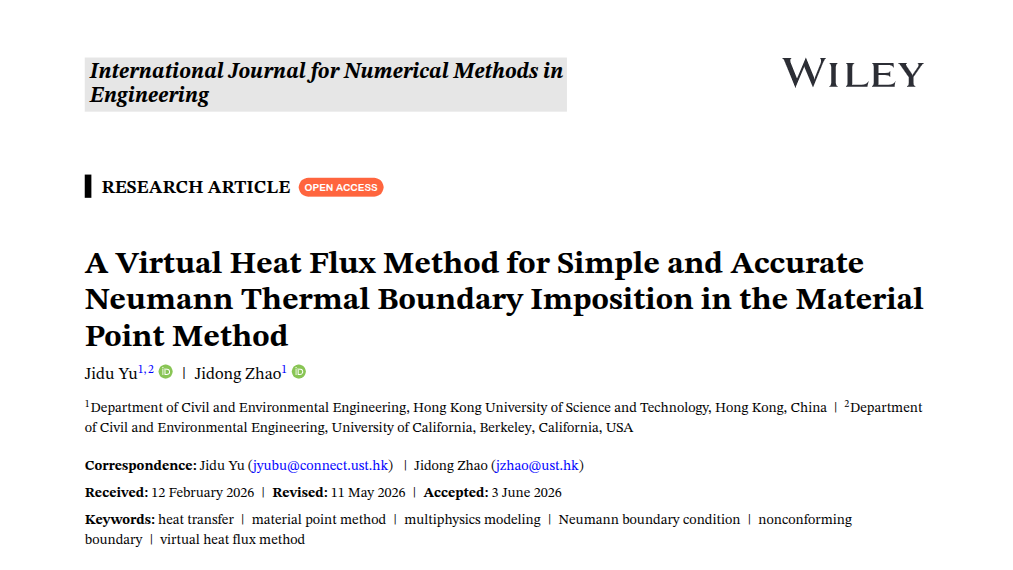
A new way to impose heat-flux boundary conditions in the material point method without tracking the boundary, now published in the International Journal for Numerical Methods in Engineering.
Read more →Jun 14, 2026
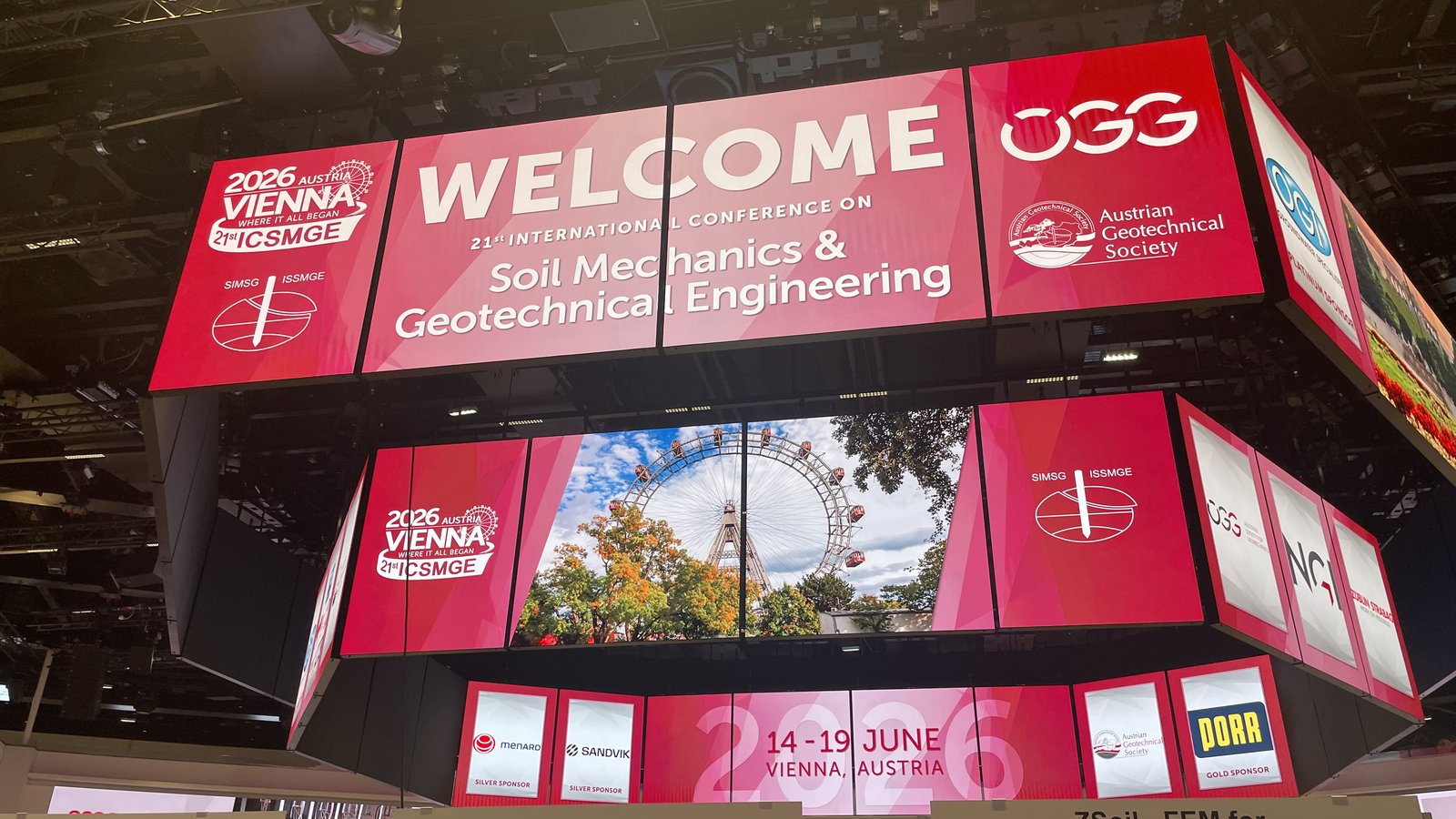
Jidu attended the 21st International Conference on Soil Mechanics and Geotechnical Engineering in Vienna, Austria, where our high-fidelity multiscale framework for permafrost thaw-related geohazards appears in the proceedings.
Read more →May 14, 2026
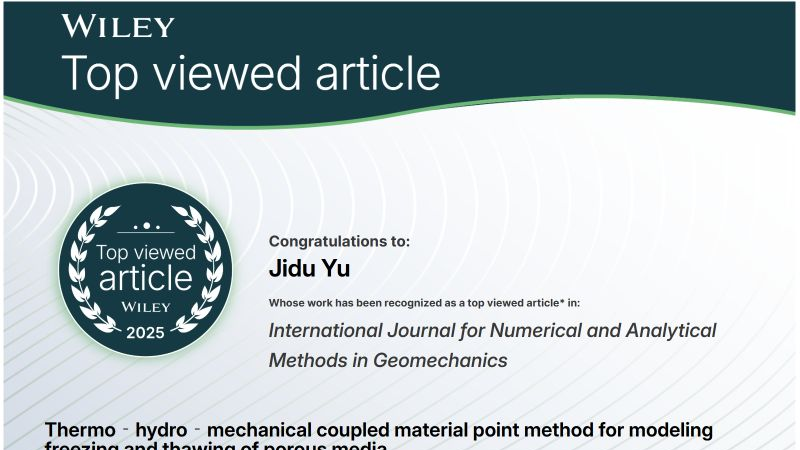
Our THM-coupled MPM paper for freezing and thawing porous media has been named a Wiley Top Viewed Article, ranking among the top 10% most-viewed papers published in IJNAMG in 2024.
Read more →